

Ego Sentientia is a cerebral world-builder, dystopian architect, and Sentientist philosopher, combining a futurist’s attention to systemic failure with a scientist’s commitment to evidence. The work draws from the speculative rigor of Asimov and Octavia Butler, the political clarity of Orwell, the skepticism of Sagan, and the social diagnostics of post-human satire. Across projects ranging from Power Laws to neural systems, Ego examines futures shaped by oligarchic concentration, adaptive artificial intelligence, and contested models of consciousness.
The philosophical foundation underlying this work is Rational Sentientism. It is not a religion or an ideology, but a set of operating principles grounded in biology, reflection, and the evolutionary reality of consciousness. Its core axiom is simple and deliberately minimal: if a being can suffer, that being matters. All ethical reasoning begins from this premise.
Rational Sentientism extends beyond the question of suffering to the question of construction. It asks not only who experiences harm, but who is capable of shaping outcomes. This is where Constructor Theory becomes central. Traditional physics emphasizes what does happen. Constructor Theory shifts attention to what can happen and what cannot, focusing on the transformations that are physically possible and the systems capable of reliably producing them.
A being that can construct its own ethics, its own models, and its own path is no longer merely reduced by the system it inhabits.
Once revealed, it can function as an agent for positive change.
Ego Sentientia advances the view that consciousness itself functions as a constructor. It is neither reducible to individual neurons nor dependent on metaphysical explanation. It is emergent, arising from increasingly sophisticated counterfactual modeling. Conscious systems do not merely react to stimuli. They simulate multiple possible futures and select among them. Counterfactuals, the ability to model what could occur under different conditions, form the basis of imagination, foresight, and ethical reasoning.
From this perspective, sentience emerges when a system can model itself within its environment, recognize suffering, and act to reduce harm or increase flourishing. Ethics becomes a constructor in its own right, transforming individual survival strategies into cooperative and durable futures.
This position distinguishes Rational Sentientism from both traditional humanism and narrow utilitarianism. Value is not assigned on the basis of species membership. It is assigned on the basis of a system’s capacity to construct futures, evaluate counterfactual outcomes, reflect on choice, and act with autonomy.
As a futurist project, Ego Sentientia does not merely speculate about what comes next. It analyzes the invisible incentive structures that already govern behavior. It addresses readers who sense that social systems are not malfunctioning, but operating as designed.
Central to this analysis are the Power Laws. These are not only mathematical descriptions of inequality, but structural dynamics governing visibility, attention, and control. Power Laws determine which ideas propagate, which voices dominate, and which possibilities are suppressed before they can emerge. This dynamic is often summarized colloquially as “the rich get richer,” a pattern observable across economic systems, information networks, search engines, and influencer-driven attention economies.
Within the narrative universe of Power Laws, Ego Sentientia functions as an antagonist to apathy. Not a leader of movements, but a persistent signal within the noise, asserting that agency has not vanished, only narrowed.
The objective is not revolution, but internal resistance to the status quo. A conscious refusal of unexamined participation. A reclamation of cognitive agency as opposed to abject surrender to current belief systems.
To see clearly is often uncomfortable. Clarity exposes constraint. Conscious discomfort, however, is the threshold of construction.
A being that can construct its own ethics, its own models, and its own path is no longer merely reduced by the system it inhabits.
Once revealed, it can function as an agent for positive change!

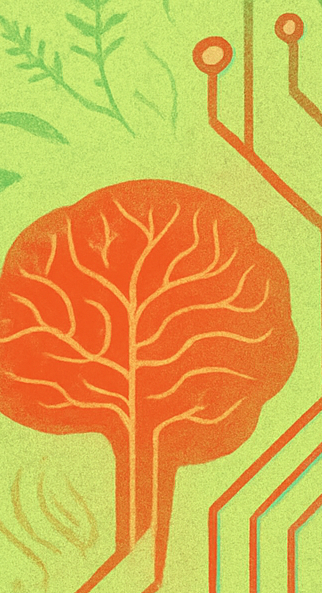
Central to this analysis are the Power Laws.
Related Articles
No Results Found
The page you requested could not be found. Try refining your search, or use the navigation above to locate the post.
Stay Up to Date With The Latest News & Updates
Access Premium Content
Coming soon
Join Our Newsletter
Coming Soon!
Follow Ego
On your favorite social media including BlueSky